



Covered Bridges in Linn County
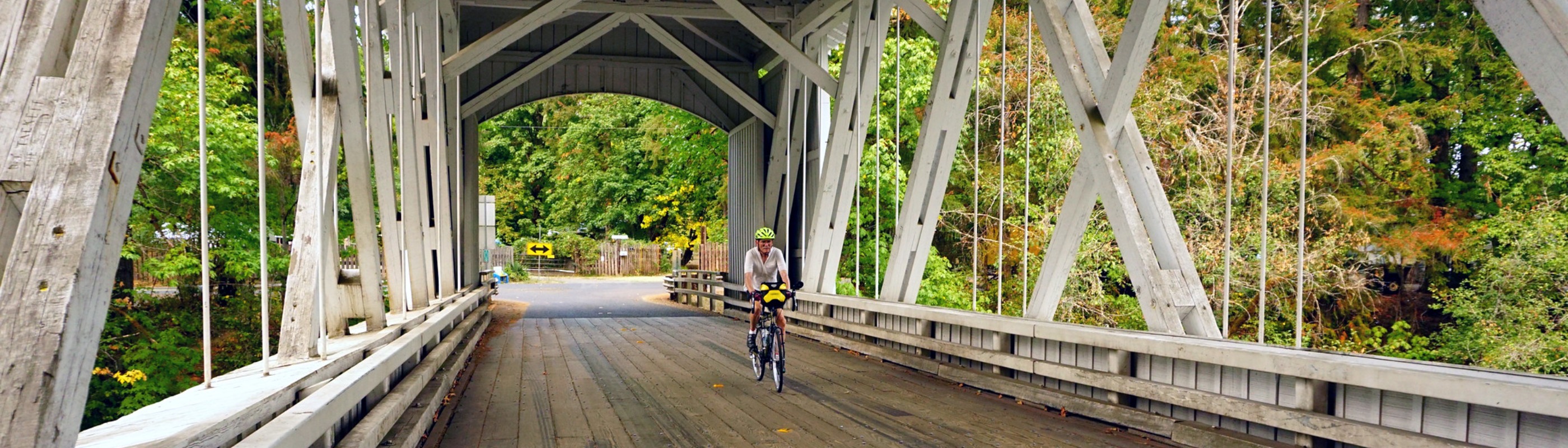
To truly appreciate the Willamette Valley's natural beauty, you will want to venture down roads less traveled and explore Linn County’s collection of eight scenic covered bridges. These quaint structures evoke a simpler time when life moved a little slower, and architects built roofs over bridges to protect the massive timbers from Oregon’s rainy climate.
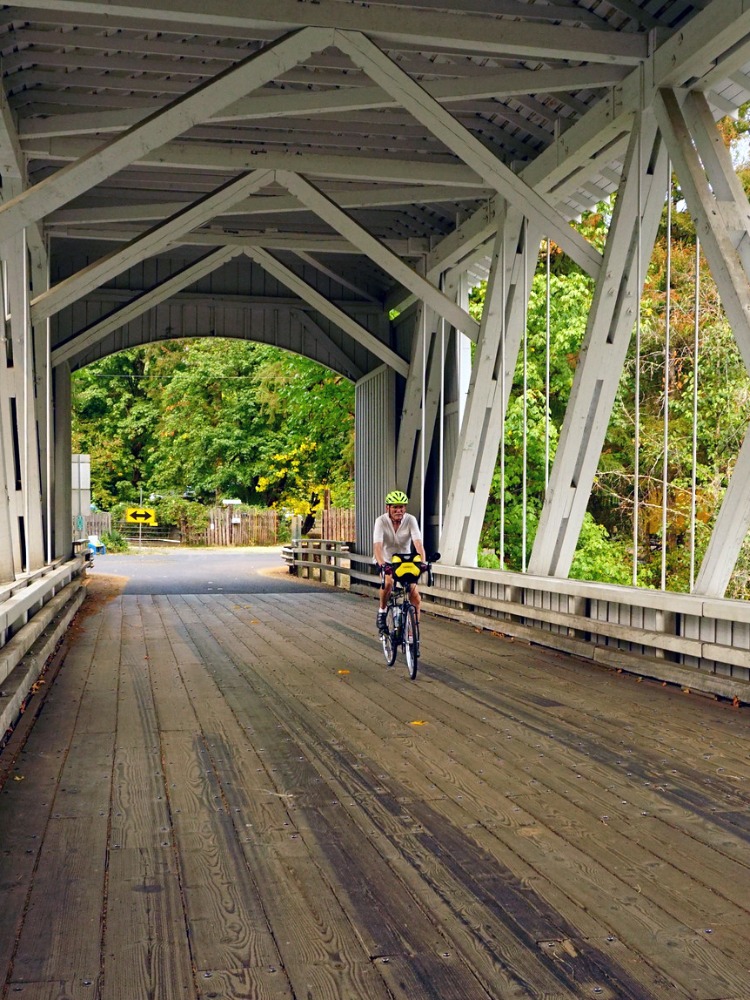
As you tour these bridges, notice the diagonal bracing and counter bracing of the beams in a crisscross pattern, both on the sides of the bridge and overhead under the roof. This is the Howe truss design, developed in 1840 by William Howe, which helped make the bridges stronger and last longer.
History of Oregon's Covered Bridges
Early pioneers built the first covered bridges in Oregon, which later gave way to better-designed structures beginning in the early 20th Century. With a lack of steel during the World Wars and an abundance of Douglas fir, construction of these treasures continued well into the 1950s. Early on, trees were felled and hewn at the bridge site. Covering the bridges, while a beautiful addition to any span, had the practical application of keeping the wooden trusses dry. A covered bridge can last up to 80 years, while uncovered wooden bridges had about a nine-year lifespan.
At one time, Oregon was home to about 450 covered bridges. Today, just over 50 remain, but the state still has the largest collection of covered bridges in the West and one of the largest in the nation. Carefully maintained, most are still open to both pedestrian and vehicle traffic. Take a day to bike or drive your way to these impressive spans along quiet country roads.
Take the Tour
Explore Linn County’s eight historic covered bridges along quiet country roads, through farmland and into the Cascade foothills. Follow the five-bridge loop near Scio for a shorter outing, or extend your drive to visit all eight.
The approximately 30-mile Scio route begins with Hoffman Bridge and continues to Gilkey, Shimanek, Hannah, and Larwood bridges. Allow about two and a half hours to enjoy this scenic tour, or choose a few stops if your time is limited.
For a longer adventure, continue toward Sweet Home to visit Weddle Bridge in Sankey Park, then travel east to Short Bridge near Cascadia. Return through Sweet Home and follow Highway 228 west to Crawfordsville Bridge before heading back toward Albany.
Planning to visit all eight bridges? Make a day of it! Before heading out, stop by an Albany eatery to pick up sandwiches or other picnic favorites to enjoy along the way. Allow plenty of time for photographs, exploring, and a leisurely lunch surrounded by Linn County’s beautiful countryside.
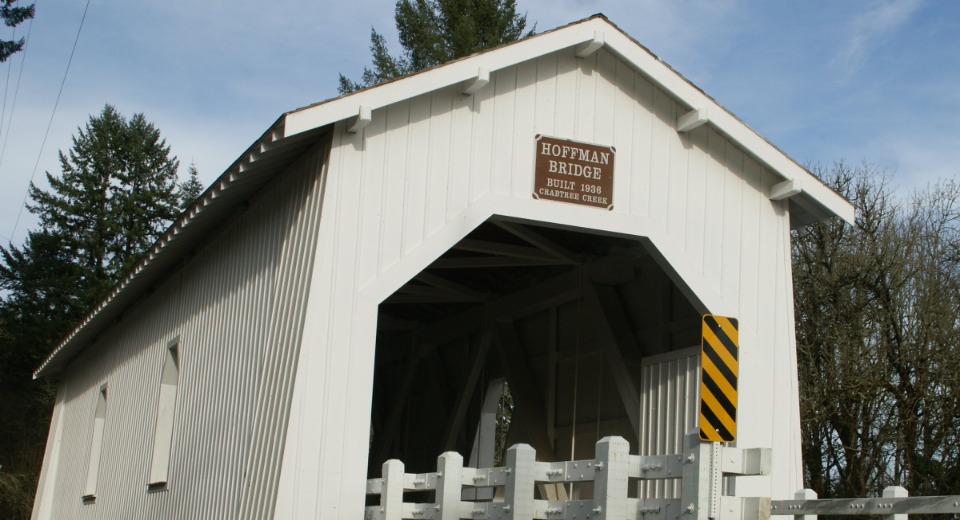
HOFFMAN BRIDGE
Spanning 90 feet across Crabtree Creek. The Hoffman Bridge was built in 1936 primarily with hand tools. Visitors can view adze marks on the upper timbers where workers shaped them by hand, and Gothic windows in place of open sides.
Photo by Oliver J. Anderson
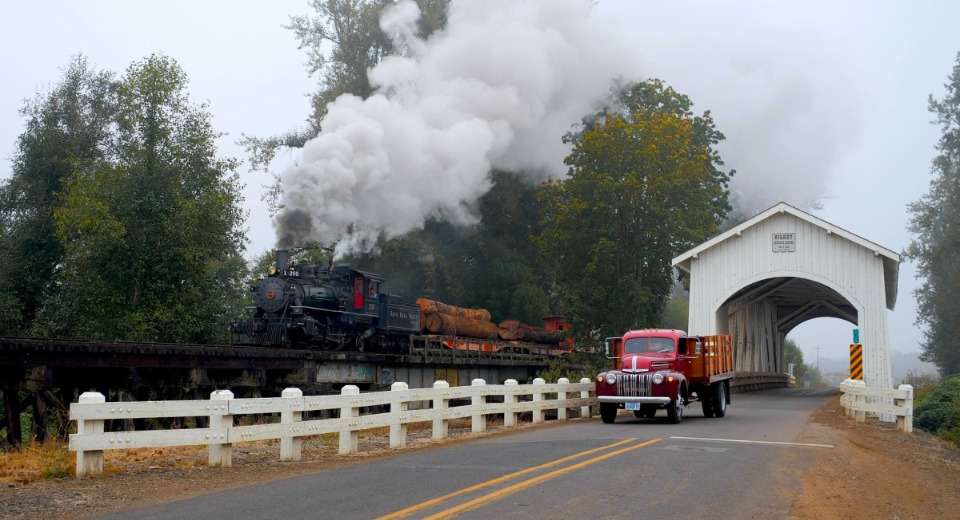
GILKEY BRIDGE
Built in 1939, the Gilkey Bridge spans 120 feet over Thomas Creek and remains open to automobile traffic. This bridge stands as a reminder of what was once the town of Gilkey, Oregon. Notable features include open sides and curved portal openings.
Photo by Camron Settlemier
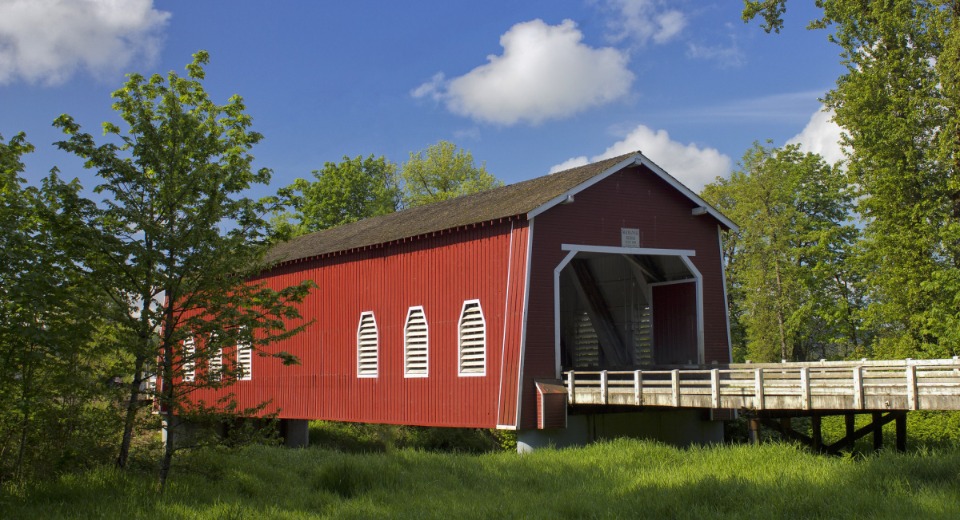
SHIMANEK BRIDGE
The Shimanek Bridge, built in 1927 and reconstructed in 1966, is Linn County's only red covered bridge. This special bridge spans 130 feet over Thomas Creek and features Gothic louvered windows and a cedar shake roof.
Photo by Gary Thurman
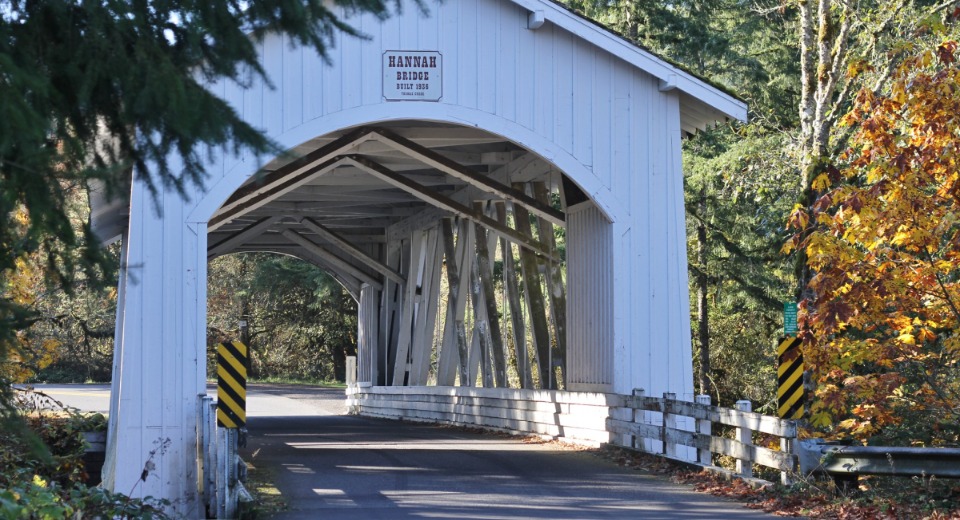
HANNAH BRIDGE
Originally built on land from a Donation Land Grant in 1846, the Hannah Bridge has spanned Thomas Creek since 1936. This bridge handles daily automobile traffic and is a popular spot for swimming and fishing.
Photo by Dina Ratzlaff
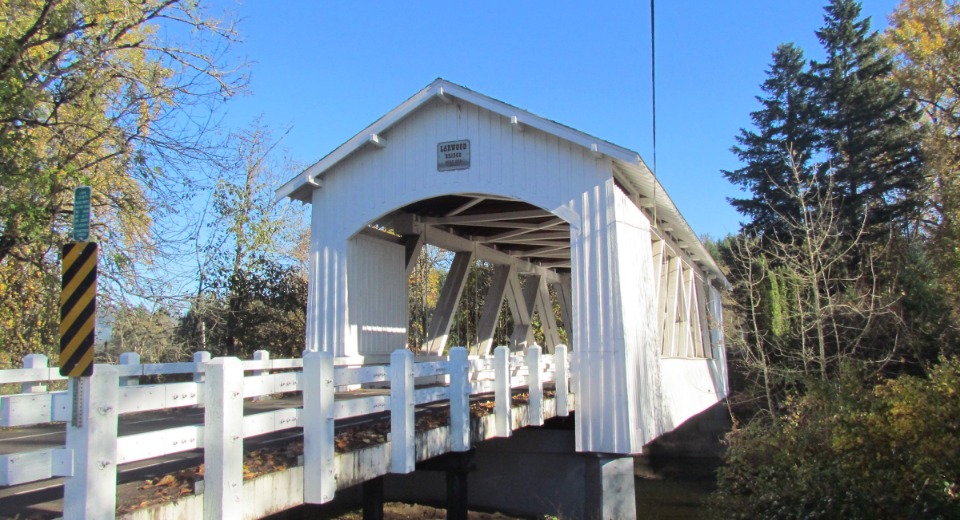
LARWOOD BRIDGE
Built in 1939 near the confluence of Roaring River and Crabtree Creek, the Larwood Bridge stands proudly at Larwood Wayside Park. This bridge makes for a great picnic and fishing spot. A water-powered wheel that once provided electricity to locals remains as a reminder of simpler times.
Photo by Shelly Wilson
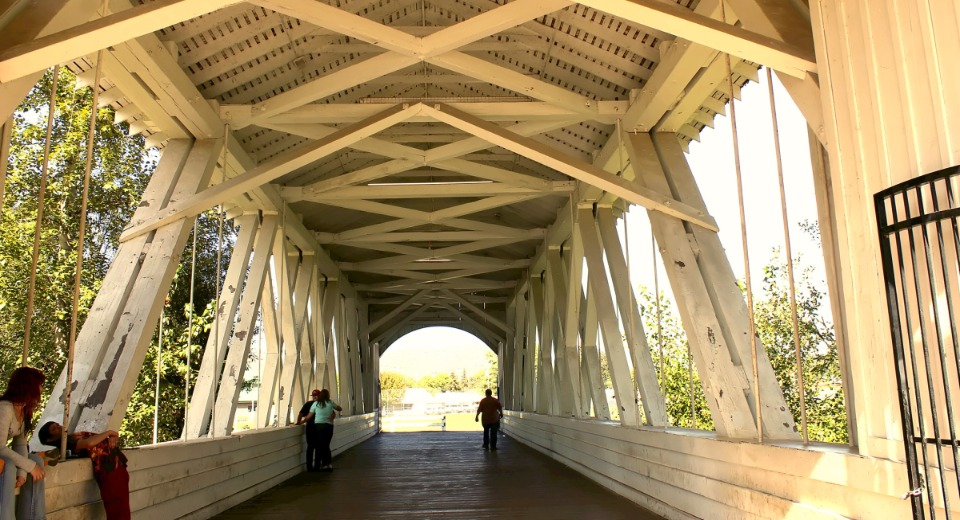
WEDDLE BRIDGE
Located in Sweet Home, spanning Ames Creek in Sankey Park, the Weddle Bridge features exposed trusses and rounded portals. Built in 1937, it carried traffic over Thomas Creek for 43 years until it was bypassed in 1980.
Photo by Margo Bennett
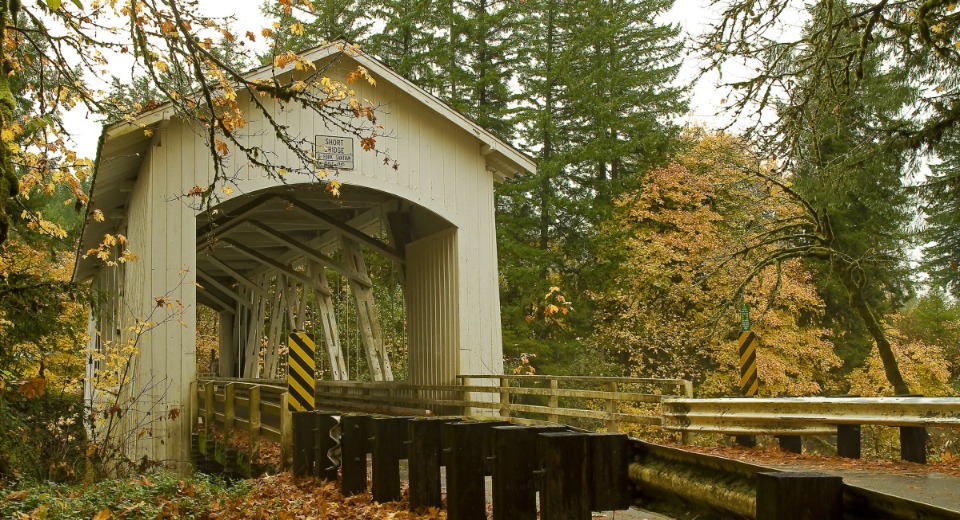
SHORT BRIDGE
Built in 1945, the Short Bridge was once commonly known as the Whiskey Butte Bridge but was renamed after longtime area resident Gordon Short. It is one of the few remaining bridges to have a wooden shingle roof and is the easternmost covered bridge in Linn County.
Photo by Nick Boren
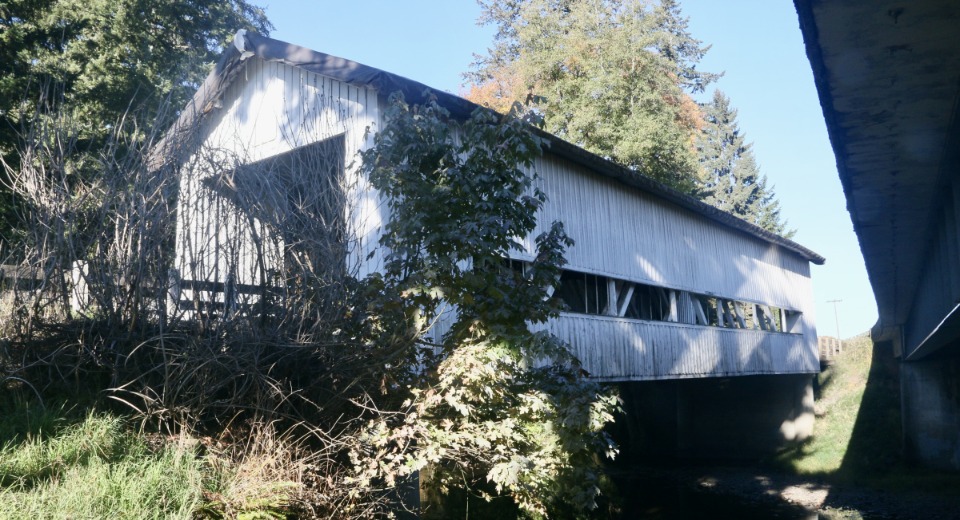
CRAWFORDSVILLE BRIDGE
Constructed in 1932, the Crawfordsville Bridge was named after Philemon Crawford, whose land the town and bridge were originally built on. This bridge spans 105 feet over the Calapooia River and features slit windows on both sides.
Photo by Don Lyon
Maps and information for self-guided tours are available at the Albany Visitors Association. You’ll find a suggested tour route and directions on Page 20 of Seems Like Old Times or you can download the free Albany Explorer app on your phone to access an interactive tour, a map, and other information about our covered bridges.